Physics based modeling
Deciding which analogs deserve a free-energy calculation
Relative binding free energies are most useful when the chemical question and simulation setup are well matched.
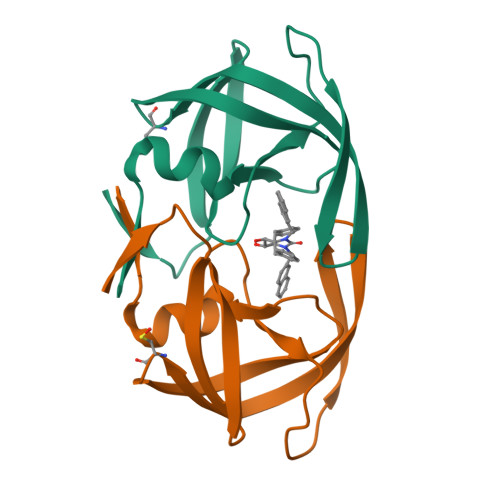
A project has a reliable binding pose and a list of close analogs, but synthesis capacity is limited. Docking places most of them in the same pocket and gives scores too similar to support a decision. Relative binding free-energy calculations can help rank these changes, provided the assumptions behind the comparison are credible.
The thermodynamic comparison
Free-energy perturbation grew from statistical mechanics: differences between states can be estimated by sampling molecular configurations under defined energy models. In a relative binding calculation, one ligand is transformed into another computationally, usually through intermediate states. Performing the transformation in the protein complex and in solvent gives a thermodynamic cycle for the change in binding free energy.
This avoids treating a favorable contact in isolation. A new polar group may interact with the protein but also prefer water strongly. Binding depends on the balance. At room temperature, a tenfold change in an equilibrium dissociation constant corresponds to roughly 1.4 kcal/mol, so errors that look numerically small can affect a synthesis decision.
Improvements in force fields, sampling, and practical workflows made these calculations more usable in medicinal chemistry. Wang and colleagues' 2015 study evaluated a modern protocol across multiple targets and included prospective applications [1]. It is evidence for what a tested workflow can achieve, not a transferable accuracy guarantee for every new series.
Choose a tractable network
Start with measured compounds that have consistent assay conditions and a plausible shared binding mode. Build transformations around chemically interpretable changes and retain redundant paths where feasible. Ring rearrangements, net-charge changes, alternative protonation states, and changes in binding mode deserve explicit treatment; a short atom mapping does not make them simple physical problems.
Run a retrospective check that resembles the proposed use. If the program concerns substitution around a solvent-exposed ring, success on a different buried subseries may be weak evidence. Record the experimental uncertainty alongside the prediction error. An IC50 obtained under changing assay conditions should not be silently treated as an equilibrium binding constant.
Inspect the trajectories behind the ranking
Sampling can be limited by slow protein rearrangements or water exchange. Independent repeats, convergence checks, and cycle consistency help identify trouble, although none alone establishes correctness. Inspect whether important interactions and hydration states are actually sampled. A narrow numerical uncertainty estimate can coexist with a systematic error caused by an incorrect protonation state.
The practical output should group compounds whose differences are unresolved. If two analogs differ by less than the observed error of the local workflow, select between them using synthesis effort, selectivity hypotheses, and property risk rather than decimal places. A modest predicted potency loss may be acceptable when the change addresses a serious solubility problem.
Relative free energies are particularly useful for focused lead optimization and examining specific resistance mutations. They are less straightforward for arbitrary scaffold changes without structural support. The next experimental round should include compounds that test the calculation's assumptions, especially when a predicted gain depends on a new water arrangement or protein conformation.
References
- Wang et al. Accurate and reliable prediction of relative ligand binding potency in prospective drug discovery by way of a modern free-energy calculation protocol and force field. JACS (2015).Benchmark and prospective evidence for a practical relative free-energy protocol.
- Wang et al. On achieving high accuracy and reliability in the calculation of relative protein–ligand binding affinities (2012).Method development addressing sampling and energy-model limitations.