Physicochemical properties
A solubility prediction needs a pH and a solid form
Separating ionization, hydration, and crystal packing before choosing a chemical modification.
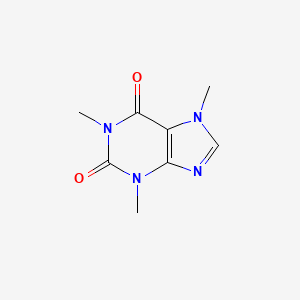
Two teams report different solubilities for the same compound. One diluted a DMSO stock into buffer and measured after a short incubation; the other equilibrated crystalline material in water. Neither result is necessarily wrong. They may describe different physical states, pH conditions, and time scales, which makes a single structure-based prediction difficult to interpret.
Define the measurement before fitting a model
Intrinsic solubility refers to the neutral species under specified conditions. Total solubility can include ionized species and depends on pH. Kinetic measurements can capture a transient supersaturated state, while an equilibrium measurement depends on the solid phase present. Temperature, salt form, and the analytical method can alter the comparison.
For an ideal monoprotic base in equilibrium with its neutral solid, total solubility is related to intrinsic solubility by S = S0(1 + 10^(pKa − pH)). For a monoprotic acid, the exponent is pH − pKa. These relationships are useful starting points, with assumptions that can fail when salts precipitate, multiple ionizable groups interact, or the solid form changes.
Hydration competes with the solid state
A molecule must leave its solid phase and enter solution. Improving its interactions with water may help, but a strongly stabilized crystal can still limit solubility. Yalkowsky and Valvani developed a semiempirical approach that connected aqueous solubility with partitioning and solid-state contributions [1]. The work explains why lipophilicity alone cannot capture every solubility problem.
Later structure-based approaches, including Delaney's ESOL model, offered estimates without requiring a measured melting point [2]. Such models are useful for screening ideas. Their convenience does not supply the missing pH or crystal-form information, and their error needs to be judged against the intended decision.
Diagnose a series before changing it
Assemble measurements with consistent conditions and retain the metadata. Compare predicted ionization, measured or calculated lipophilicity, melting behavior where available, and solubility across pH. Do not pool every value labeled logS into a single training endpoint without checking what was measured.
If solubility increases strongly on ionization, pKa may offer a design opportunity, but increasing charge can also affect permeability and distribution. If closely related neutral compounds have similar lipophilicity yet very different solubility, inspect solid-state behavior. Changes in symmetry or intermolecular interactions may matter, although predicting the resulting crystal packing remains difficult.
A hypothetical lead illustrates the distinction. Adding a basic group might improve apparent solubility in an acidic assay but provide little benefit at the pH of the intended formulation or biological compartment. The modification might also introduce an efflux liability. Measure the conditions that matter to the project rather than choosing the condition with the most favorable value.
Modelers can rank analogs, identify uncertain pKa assignments, and flag predictions outside the training chemistry. Property calculations are most useful when paired with a small, deliberately chosen measurement set. For a key progression decision, confirm the material form and obtain an appropriate experimental solubility value. Report the result with its conditions so the next modeler does not inherit a number stripped of its meaning.
References
- Yalkowsky and Valvani. Solubility and partitioning I: Solubility of nonelectrolytes in water. Journal of Pharmaceutical Sciences (1980).The physical basis for combining partitioning and solid-state contributions.
- Delaney. ESOL: estimating aqueous solubility directly from molecular structure. Journal of Chemical Information and Computer Sciences (2004).A structure-based prediction method and its validation.
- Comparison of a miniaturized shake-flask solubility method with automated potentiometric acid/base titrations and calculated solubilities (2005).Experimental comparison useful for interpreting measured and calculated values.