Discovery trends
Recent discovery methods face a prospective test
Structure prediction and generative chemistry are changing project workflows; experimental follow-up determines their value.
A method can perform well on a public benchmark and still be difficult to use in a live discovery project. The project asks for a compound that can be made, tested in the available assay, and improved after the result arrives. Recent work in structure prediction and generative chemistry is valuable to assess against that sequence of decisions.
Structural proposals have broadened
AlphaFold 3, reported in 2024, extended joint structure prediction to complexes containing proteins, nucleic acids, small molecules, and other components [1]. Its development combined learned structural information with a diffusion-based approach. This gives modelers another way to propose complexes when experimental structures are absent or incomplete.
A predicted complex still needs chemical inspection. Check ligand stereochemistry, protonation, local confidence, and whether the predicted pocket is compatible with known biology. Several plausible poses can suggest different analogs. Independent experimental restraints are useful for distinguishing them. A confidence score for a structure does not directly measure binding affinity or establish functional activity.
Generated molecules are reaching experimental studies
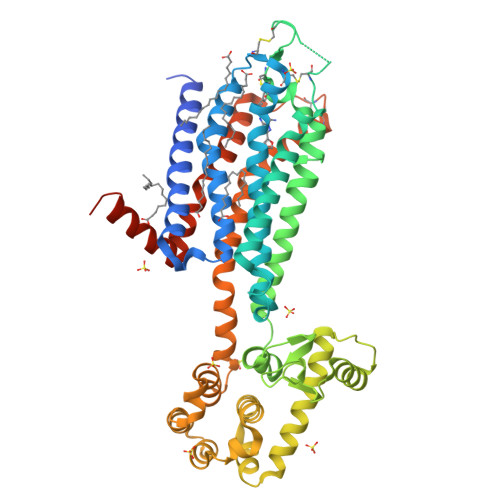
Thomas and colleagues reported a 2025 study combining a chemical language model, reinforcement learning, and structure-based evaluation for the adenosine A2A receptor [2]. The work included synthesis and testing, followed by crystal structures for the strongest binders. That sequence allows a binding hypothesis to be examined experimentally and fed into another design round.
Another 2025 report described the ENPP1 inhibitor ISM5939, developed using generative design with experimental pharmacology [3]. It offers a different application in which compound properties and biological response matter beyond a generated structure. These studies demonstrate particular workflows; they do not establish that every generative system will outperform conventional design across targets.
Set up a comparison that a project can use
A practical pilot should compare AI-assisted proposals with an established selection method under the same synthesis and assay budget. Keep track of how many proposals were generated, how many survived chemistry review, how many were attempted, and how many yielded usable measurements. Report failed syntheses and inactive compounds. A high hit rate among a heavily selected subset is difficult to interpret without the selection history.
Freeze the relevant model and data before the prospective round. Retrospective access to the eventual answers can otherwise enter through training datasets, close analogs, or manual selection. For a design task, assess chemical diversity and route feasibility as well as potency. For a structure task, ask whether the proposal correctly predicts an interaction that distinguishes competing designs.
The most useful near-term applications may be narrow: expanding ideas around a difficult substituent, suggesting a testable pose, or prioritizing compounds from an otherwise impractical search space. Integration with physics-based calculations and expert chemistry review can be evaluated as part of the workflow, with the contribution of each step recorded.
A method earns a place in a program when the next round becomes more informative or more productive at an acceptable cost. That can be measured through confirmed compounds, resolved hypotheses, and the resources spent to obtain them. The papers below provide concrete examples for designing such a trial.
References
- Abramson et al. Accurate structure prediction of biomolecular interactions with AlphaFold 3. Nature (2024).Primary method paper for joint biomolecular structure prediction.
- Thomas et al. Identification of nanomolar adenosine A2A receptor ligands using reinforcement learning and structure-based drug design. Nature Communications (2025).Prospective synthesis, biological testing, and structural follow-up.
- Oral ENPP1 inhibitor designed using generative AI as next generation STING modulator for solid tumors. Nature Communications (2025).An experimental drug-discovery application beyond benchmark performance.