Medicinal chemistry
Growing a fragment without losing the reason it binds
Weak binding can be a useful start when structural evidence and growth vectors support a tractable series.
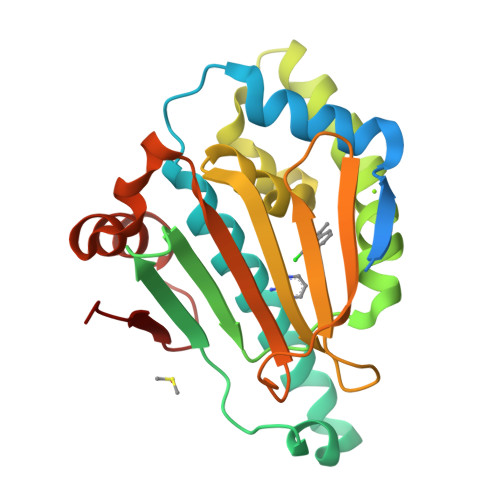
A fragment hit can bind weakly yet make a well-defined interaction in a useful region of a protein. The challenge is to build affinity while retaining that interaction and keeping the resulting molecule experimentally manageable. Adding atoms is easy to propose; ensuring that they contribute useful binding energy requires evidence.
Small starting points required different assays
Fragment discovery developed around methods capable of detecting interactions that conventional screening could miss. In the 1996 SAR by NMR paper, Shuker and colleagues identified small molecules binding nearby protein subsites and used structural information to support their optimization and linkage [1]. NMR and crystallography helped make weak binders actionable by providing information about where and how they bind.
Fragment growing, linking, and merging solve different design problems. Growing extends a confirmed binder toward an adjacent region. Linking attempts to connect separately identified binders while preserving their interactions. Merging combines compatible structural features. The apparent geometric simplicity of joining two fragments can conceal substantial conformational or desolvation costs.
Confirm the starting interaction
Before proposing a large analog, check the fragment's identity, solubility, and binding evidence. Crystal occupancy and local density deserve close inspection because a fragment pose can be less certain than the overall protein model. Orthogonal binding measurements help exclude an interpretation based solely on a crystallization condition or assay artifact.
The Hsp90 study cited below demonstrated how a fragment could be developed through structure-guided chemistry into a potent lead series [2]. Its relevance lies in the experimentally supported progression. A productive growth vector on one protein cannot be transferred to another just because both starting fragments share a heterocycle.
Give each added group a job
Inspect nearby waters and protein flexibility before selecting a vector. A substituent may reach an attractive pocket only by disturbing the fragment's original anchor. A polar atom can be costly if buried without a satisfactory interaction. Conversely, a solvent-facing group may offer a route to improve properties even if it contributes little direct affinity.
Modelers can enumerate feasible analogs, compare conformations, and inspect whether predicted poses preserve the experimentally supported anchor. Use calculated affinity differences selectively once the series supports the assumptions of the method. The earliest growth steps often need experimental structures because a pose change can invalidate comparisons based on the starting fragment.
Ligand efficiency can help describe the balance between affinity and size, but it should not become the sole selection rule. A small affinity gain may be worthwhile if it creates a synthetically accessible branch point. A larger gain may be unattractive if it requires enough lipophilicity to compromise solubility or cellular selectivity.
For the next synthesis round, include modest extensions that test distinct vectors rather than placing every proposed interaction in one molecule. Measure affinity and basic properties under consistent conditions. If the first extension moves the anchor, revise the structural hypothesis before adding further functionality. A fragment program benefits from retaining a clear record of which structural changes have been experimentally explained and which remain assumptions.
References
- Shuker et al. Discovering high-affinity ligands for proteins: SAR by NMR. Science (1996).An early experimental method for identifying and linking weakly binding fragments.
- Murray et al. Fragment-based drug discovery applied to Hsp90. Discovery of two lead series with high ligand efficiency. Journal of Medicinal Chemistry (2010).An experimental fragment-to-lead case study with structural guidance.