Medicinal chemistry
A methyl group can change more than lipophilicity
Interpreting methyl substitutions through conformational preference, local interactions, and measured properties.
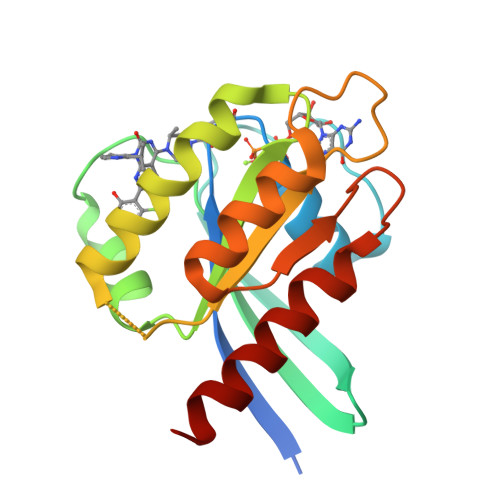
Replacing a hydrogen with a methyl group sometimes produces a larger change in potency than its size would suggest. The explanation can be local packing, a change in preferred conformation, altered hydration, or a combination. Calling the result a magic methyl effect describes the observation but does little to guide the next synthesis.
Separate the possible explanations
A methyl group may fill a small hydrophobic region or change the torsional preference of a neighboring bond. In the latter case, the unbound ligand may spend more time in a conformation compatible with binding. The same substitution can also create steric conflict or change the preferred pose. A favorable drawing of the final complex cannot establish which explanation dominates.
The medicinal chemistry practice of systematic substitution predates large computational datasets. Matched molecular pair analysis made those observations easier to examine across collections: compare molecules differing by a defined transformation and inspect the corresponding property changes. Leach and colleagues applied this approach to pharmaceutical properties including solubility and exposure [1]. It provides a distribution of precedents, whose chemical context matters when applying them to a new series.
Examine conformations before assigning a mechanism
Generate conformers of the parent and methylated analog under consistent assumptions. Compare accessible torsions, relative energies, and the geometry required by the binding model. Quantum mechanical torsion scans can help when an important local conformational preference is poorly represented by the force field. Solvent and protonation need attention because an isolated gas-phase minimum may not dominate in solution.
For an alpha-methyl substitution on a saturated nitrogen-containing ring, check whether a stereocenter is introduced. The stereoisomers can present the methyl group and neighboring substituents differently. Ring puckering and nitrogen substitution complicate a simple axial-versus-equatorial explanation. Model the relevant stereoisomers explicitly and avoid assigning the result of a racemate to one predicted pose.
A useful experimental precedent
Kettle and colleagues reported a KRAS G12C inhibitor series in which introducing a methyl group on a piperazine was associated with improvements across potency, permeability, clearance, and reactivity [2]. That example is valuable because the measurements extend beyond affinity. It does not establish that the same substitution will improve another piperazine-containing series.
In a new program, make the closest feasible matched comparison and measure more than the primary potency endpoint. If cellular activity improves much more than biochemical activity, examine permeability, efflux, and intracellular engagement. If clearance changes, use metabolite identification where possible before claiming that the methyl group simply blocked metabolism.
The chemistry plan should discriminate among the proposed mechanisms. A positional isomer may test pocket filling, while separate stereoisomers can probe conformational effects. If the gain depends on a specific torsion, related substitutions can test whether that preference generalizes. Free-energy calculations may help with affinity, but they cannot explain a whole-cell result without exposure information.
Keep the explanation proportional to the evidence. A structure showing better packing supports a structural hypothesis; matched activity and property measurements establish the practical consequence. A conformation-based mechanism requires evidence about the conformational change, rather than a retrospective assertion that the more potent compound was preorganized.
References
- Leach et al. Matched molecular pairs as a guide in the optimization of pharmaceutical properties; a study of aqueous solubility, plasma protein binding and oral exposure. Journal of Medicinal Chemistry (2006).Primary analysis of property changes associated with defined chemical transformations.
- Kettle et al. Structure-based design and pharmacokinetic optimization of covalent allosteric inhibitors of the mutant GTPase KRASG12C. Journal of Medicinal Chemistry (2020).A measured example of a piperazine methyl substitution affecting several discovery endpoints.