Target modalities
Choosing a modality starts with the biology
A practical comparison of inhibition, protein depletion, and suppression of protein synthesis.
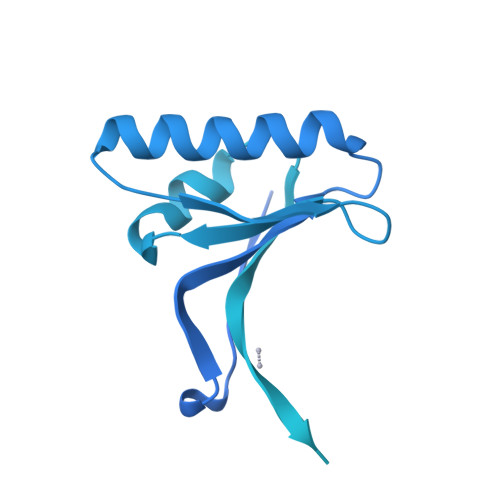
A target can have convincing disease biology and still be a poor match for the proposed drug. An inhibitor might block an enzyme while leaving its scaffolding function intact. An antibody might recognize a purified protein yet have little access to the relevant tissue compartment. These differences need to enter the program before a screening campaign fixes the chemistry strategy.
Define the perturbation
Write the intended biological change in operational terms: reduce catalytic activity, prevent an interaction, remove a protein, or lower its synthesis. Specify the tissue and the duration of effect. Partial suppression may be sufficient in one disease setting; another may require sustained inhibition that healthy tissue cannot tolerate. A model of binding alone cannot resolve that distinction.
The available modalities grew out of different experimental capabilities. Small-molecule discovery developed around chemical perturbation of accessible binding sites. Antibody engineering made extracellular recognition a practical intervention. RNA interference introduced sequence-directed reduction of gene expression, while targeted degradation brought protein turnover into drug design. Their development expanded the interventions available for a target, but each intervention has different exposure and recovery kinetics.
PCSK9 provides a useful modeling example. Neutralizing circulating protein and reducing its production can both affect LDL cholesterol, although the processes connecting dose to response differ. A published comparative QSP study explicitly modeled antibody and siRNA approaches [1]. Comparing their binding affinities would miss much of the pharmacology.
Match the calculation to the modality
For a small molecule, inspect pocket accessibility, relevant conformations, and the concentration required for engagement. For an antibody, examine the epitope in its biological assembly and consider tissue exposure and target-mediated clearance. An RNA-directed program needs a delivery hypothesis as well as sequence specificity. A degrader requires productive recruitment of the degradation machinery in cells that express the necessary components.
The computations can then be connected through a common biological endpoint. A simple turnover model may compare the time required to reduce protein abundance and the recovery after treatment stops. More detailed models can incorporate feedback or tissue compartments when the data justify them. Uncertain synthesis rates or intracellular exposure should be varied across plausible ranges rather than absorbed into a single fitted parameter.
A decision the team can test
Consider an intracellular enzyme with a suspected noncatalytic role. A useful experimental comparison is a selective inhibitor alongside an inducible depletion system, with time-matched measurements of activity, abundance, and phenotype. Different outcomes would change the modality choice. Agreement would still require checking the depth and duration of perturbation.
Structure-based work on KRAS G12C illustrates another route: exploiting a particular mutant residue and an allosteric pocket created a chemical intervention that conventional nucleotide competition had made difficult [2]. The result depended on the target state and chemistry together.
The initial modeling deliverable should therefore identify feasible interventions and the observations that could rule each one out. If the preferred modality only succeeds under an optimistic delivery assumption, that assumption deserves an early experiment before a large analog campaign.
References
- Comparative quantitative systems pharmacology modeling of anti-PCSK9 therapeutic modalities in hypercholesterolemia (2019).A direct comparison of modality-specific mechanisms in a shared biological system.
- Ostrem et al. K-Ras(G12C) inhibitors allosterically control GTP affinity and effector interactions. Nature (2013).An experimental example of target-state and residue-specific chemical intervention.