Target validation
A knockout phenotype is only part of target validation
Connecting human genetics, perturbation experiments, and chemical evidence before committing to a target.
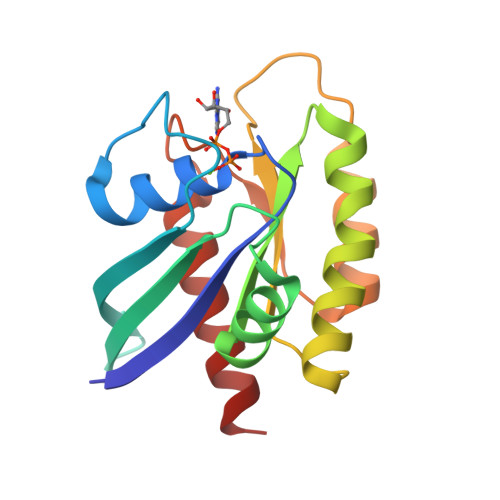
A gene knockout reduces cell growth. A compound annotated against the same protein also reduces cell growth. It is tempting to join those observations into a mechanism, but the compound may act elsewhere, and removing the whole protein can differ substantially from inhibiting one of its functions. Target validation has to establish the connection experimentally.
Evidence with different failure modes
Human genetics can connect a target to disease in people. Functional perturbation can test whether changing the target alters a phenotype. Chemical probes can establish whether a pharmacological intervention reproduces that effect at achievable exposure. These sources answer related questions, with different weaknesses. An association near a gene may implicate another gene; a knockout may trigger adaptation; an inhibitor can have consequential off-target activity.
The development of genome-scale perturbation made it possible to examine dependencies across many biological contexts. Behan and colleagues combined CRISPR screens across 324 cancer cell lines with biomarkers and target tractability to prioritize therapeutic opportunities [1]. This supported a more contextual view of dependency than treating every sensitive cell line as evidence for a broadly useful target.
Human genetics also became a practical prioritization tool as association datasets and drug-development records grew. Nelson and colleagues examined the relationship between genetic support and approved indications [2]. Such analyses help prioritize hypotheses; they do not establish that a particular compound, dose, or treatment window will work.
The modeler's contribution
A useful target dossier separates disease association, likely causal mechanism, relevant cell type, and direction of intervention. Record contradictory findings beside supporting ones. Multiple publications that reuse the same dataset should not be counted as independent evidence. Target-expression maps and pathway models can identify contexts for testing, but expression by itself does not demonstrate dependency.
Structural analysis addresses a separate question: whether the desired intervention is chemically plausible. It can identify conserved pockets that raise selectivity concerns or suggest residues for a resistance experiment. Network analysis can propose bypass pathways. These are testable hypotheses, and the dossier should name the experiment needed to evaluate each one.
Resolve a chemical-genetic disagreement
Suppose a putative inhibitor remains active after the target is deleted. Check that deletion is complete and that the assay window permits loss of the protein. Then examine compound activity in the parental and edited cells, ideally with an orthogonal perturbation. A persistent effect can indicate an alternative mechanism. Simply obtaining a more favorable docking pose will not resolve the discrepancy.
Conversely, a knockout phenotype that a compound fails to reproduce may reflect inadequate intracellular engagement, partial inhibition, or a function the compound leaves intact. Measure engagement and proximal pathway effects before rejecting the target. Rescue with an appropriately designed construct can help separate target dependence from editing artifacts.
The strongest use of computational integration is to choose the next discriminating experiment. For a biomarker-defined cancer dependency, that may be a panel spanning the proposed responder population and relevant normal cells. For a genetically supported target, it may be establishing whether adult pharmacological modulation reproduces the direction inferred from lifelong genetic variation. Both questions can change the program before chemistry becomes expensive.
References
- Behan et al. Prioritization of cancer therapeutic targets using CRISPR–Cas9 screens. Nature (2019).Functional dependency, patient context, and tractability considered together.
- Nelson et al. The support of human genetic evidence for approved drug indications. Nature Genetics (2015).Original analysis linking genetic support to drug-development outcomes.