Drug discovery overview
Choosing a hit series that can survive the next experiment
Hit confirmation and tractability should influence a program before a potency ranking becomes a chemistry plan.
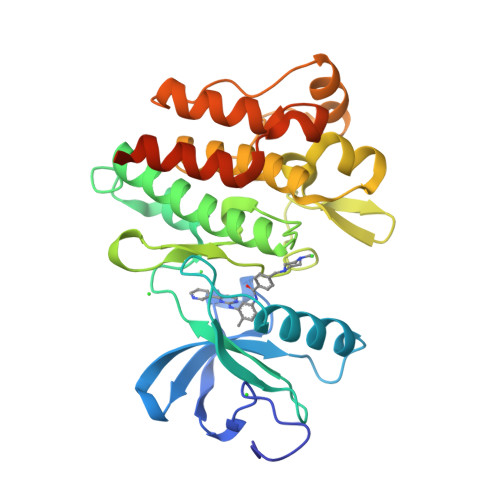
A screening campaign can produce more active compounds than a team can investigate. The strongest single-point signal is a poor way to choose among them. It may reflect assay interference, limited solubility, or an impurity, and even a confirmed binder may offer little room for useful chemistry.
Hit triage developed as screening methods became able to generate large candidate lists. Orthogonal assays, biophysical measurements, and structural follow-up addressed different sources of false confidence. Computational selection should use the evidence those methods provide, rather than treating every reported activity value as equally reliable.
Confirm the activity before explaining it
Obtain concentration-response data and confirm the identity and purity of the tested material. A fresh sample or resynthesis can expose an impurity-driven result. Repeat the measurement in an assay with a different detection principle where practical. An orthogonal result is more informative when it removes a suspected interference mechanism.
McGovern and colleagues showed that colloidal aggregation can produce apparently promiscuous enzyme inhibition [1]. This is a specific physical explanation for some screening hits, not a reason to reject every hydrophobic molecule. Appropriate controls can include detergent sensitivity and changes in enzyme concentration, interpreted alongside the assay's compatibility with those conditions.
Docking and experimental screening can also produce different candidate sets. Doman and colleagues compared both approaches against protein tyrosine phosphatase-1B [2]. The useful question for a program is whether the combined evidence produces credible chemical starting points under its particular constraints.
Rank series, then choose compounds
Cluster confirmed hits by chemical series and compare the scope for substitution. An isolated active with no plausible analogs may be harder to develop than a slightly weaker series with interpretable structure-activity relationships. Review synthetic routes early. Repeatedly selecting analogs that require bespoke chemistry can consume the experimental capacity the model was meant to save.
For each series, record the best-supported binding hypothesis, measured liabilities, and uncertain assumptions. Separate missing data from unfavorable results. A compound with no permeability measurement should not receive the same interpretation as one that has failed a suitable assay. Property predictions can help decide what to measure, but their applicability to the new scaffold needs attention.
Use the next round to discriminate
An efficient follow-up set can include a potency-oriented analog, a property-oriented analog, and a compound designed to challenge the proposed binding mode. These serve different purposes. If removal of an apparently essential interaction leaves activity unchanged, the structural explanation needs reconsideration even if the new compound remains attractive.
Agree on progression criteria before the data arrive. For an intracellular target, engagement and exposure may be essential; for an extracellular target, a different set of constraints applies. Avoid turning a familiar molecular-weight or lipophilicity threshold into a universal veto.
A useful handoff to medicinal chemistry contains confirmed structures, comparable assay results, and a short explanation of the experiment each proposed compound addresses. It should also state the result that would cause the team to stop a series. That makes a disappointing experiment informative and prevents a succession of weakly justified synthesis rounds.
References
- McGovern et al. A common mechanism underlying promiscuous inhibitors from virtual and high-throughput screening. Journal of Medicinal Chemistry (2002).Experimental evidence for aggregation-driven assay inhibition.
- Doman et al. Molecular docking and high-throughput screening for novel inhibitors of protein tyrosine phosphatase-1B (2002).A direct experimental comparison of two routes to hit identification.